How to Encourage Your Preschooler to ‘Write’ Their Own Stories
Preschoolers may not be ready to write full sentences yet, but they are absolutely ready to become storytellers. At this age, "writing" often looks like drawing a picture, scribbling across a page, labeling their artwork, or telling a story out loud while a grown-up writes the words down. None of that is a lesser version of writing; it's where writing begins.
At Reading in Preschool, we believe early writing grows out of imagination, language, and play long before it involves a pencil, and when children create their own stories in simple, hands-on ways, they build confidence, vocabulary, and literacy skills through something that feels like fun rather than a lesson.
Story writing for preschoolers is the process of expressing ideas through drawings, scribbles, pictures, spoken words, or simple labels rather than complete written sentences. This early stage of writing helps children build creativity, language, and literacy skills before they can write independently.
Why Storytelling Comes Before Writing
Long before a child can form letters, they're already communicating in creative ways. A three-year-old who lines up toy animals and narrates a rescue mission is telling a story, and so is the child who scribbles a wobbly shape and announces, "That's my house and there's a monster inside." Educators call this stage emergent writing: children understand that marks, drawings, and spoken words carry meaning before they can spell conventionally. Moving from scribbles, to shapes that stand for objects, to letter-like marks, to a few real letters is a completely normal progression, with nothing to correct or rush.
So if your child's "story" is a page of scribbles and a spoken explanation, that's exactly what this stage should look like. Your job isn't to turn it into neat handwriting, but to notice the meaning behind the marks and take it seriously, because a child who feels their ideas are worth capturing wants to keep creating.
Why Making Up Stories Builds Early Literacy
It's easy to see storytelling as "just play," but a lot of literacy learning happens every time a preschooler makes something up. Here's what each part is actually developing.
Vocabulary. Stories pull children into words they wouldn't use in everyday chatter. A child inventing a dragon tale reaches for "enormous," "cave," and "roared" because the story needs them. This kind of meaning-rich talk is one of the most effective preschool language activities you can do at home, because new words stick better when they're tied to a moment your child cares about.
Sequencing. Choosing what happens first, next, and last is real cognitive work. When your child says "First the puppy got lost, then it started raining, and then the girl found him," they're practicing the same logic behind story sequencing activities used in early classrooms, which prepares them to follow and retell events in the books they'll read later.
Comprehension. Making up a story requires a child to imagine why characters do things and how they feel. Asking "Why did the bear run away?" builds the same reasoning that strong reading comprehension for preschoolers depends on, so a child who explains their own characters is rehearsing how to make sense of someone else's.
Narrative structure. A story that starts with a problem ("the castle lost its key") and works toward a solution teaches the shape of narrative from the inside out, turning an abstract idea into something children absorb by living inside it.
Imagination. Inventing a talking puppy or a flying castle stretches a child's ability to picture things that aren't in front of them, the same mental muscle that lets a reader form pictures from words on a page. That's why sharing books that encourage imagination pairs so naturally with story creation.
Confidence. When a child's story is written down, reread, and enjoyed, they learn that their ideas have value. A preschooler who proudly "reads" their own picture book to Grandma is building the self-belief that makes them willing to try harder literacy tasks later.
Communication. Storytelling is, at its core, making yourself understood. Choosing words so a listener can follow along is a social and linguistic skill that will serve your child in conversation, in the classroom, and eventually on the page.
Signs Your Preschooler Is Ready to Create Their Own Stories
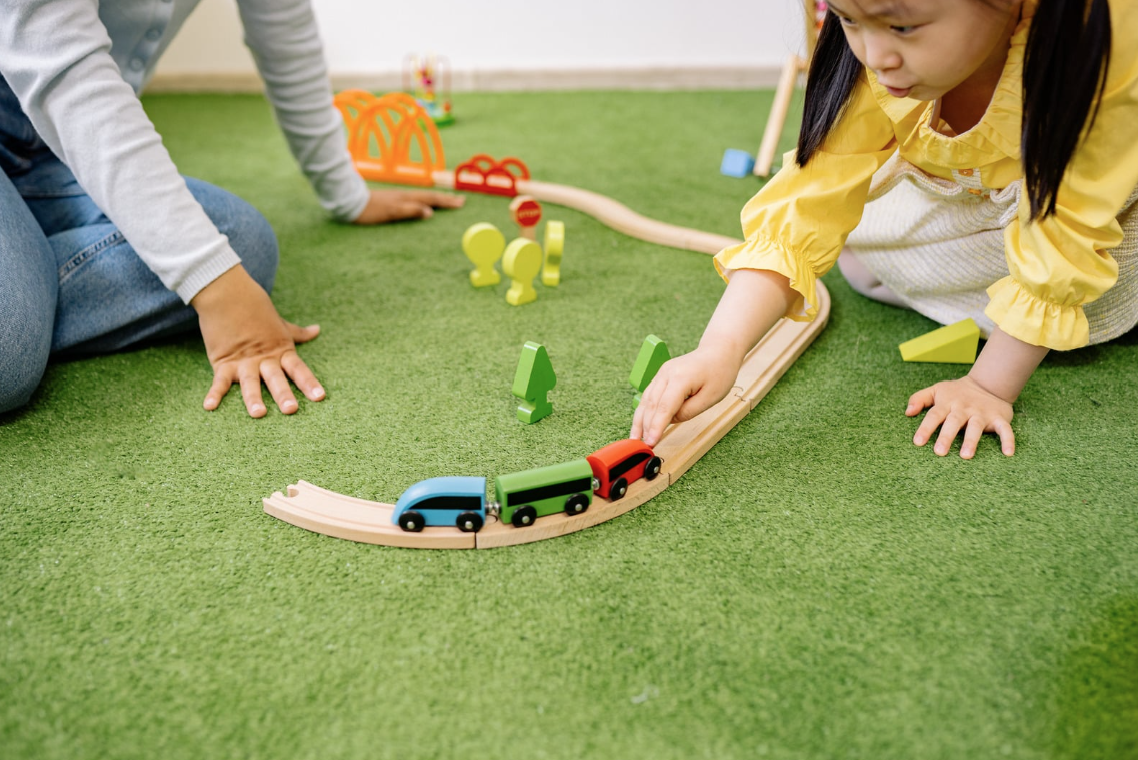
You don't have to wait for a formal milestone. Most children show readiness through everyday behavior, and once you know what to look for, you'll see openings all day long. Common signs include pretending during play, narrating out loud while they draw, asking a stream of "what if" questions, making up their own endings to familiar books, and giving personalities and voices to their toys.
If your child does any of these, they're already telling stories. All you're doing is gently helping those stories take a slightly more lasting form.
Simple Ways to Encourage Your Preschooler to "Write" Stories
Here are five low-pressure ways to help your preschooler start creating stories, none of which require holding a pencil correctly or spelling anything.
Draw the Story First
Have your child draw a picture and tell you what's happening, then write their words underneath so they can "read" it back later. Drawing first removes the pressure, since the hard part for a young child isn't the ideas but forming the letters. Many pre-writing activities for preschoolers work this way, using drawing and mark-making to build the fine-motor control real writing later requires.
Turn Pretend Play Into a Story
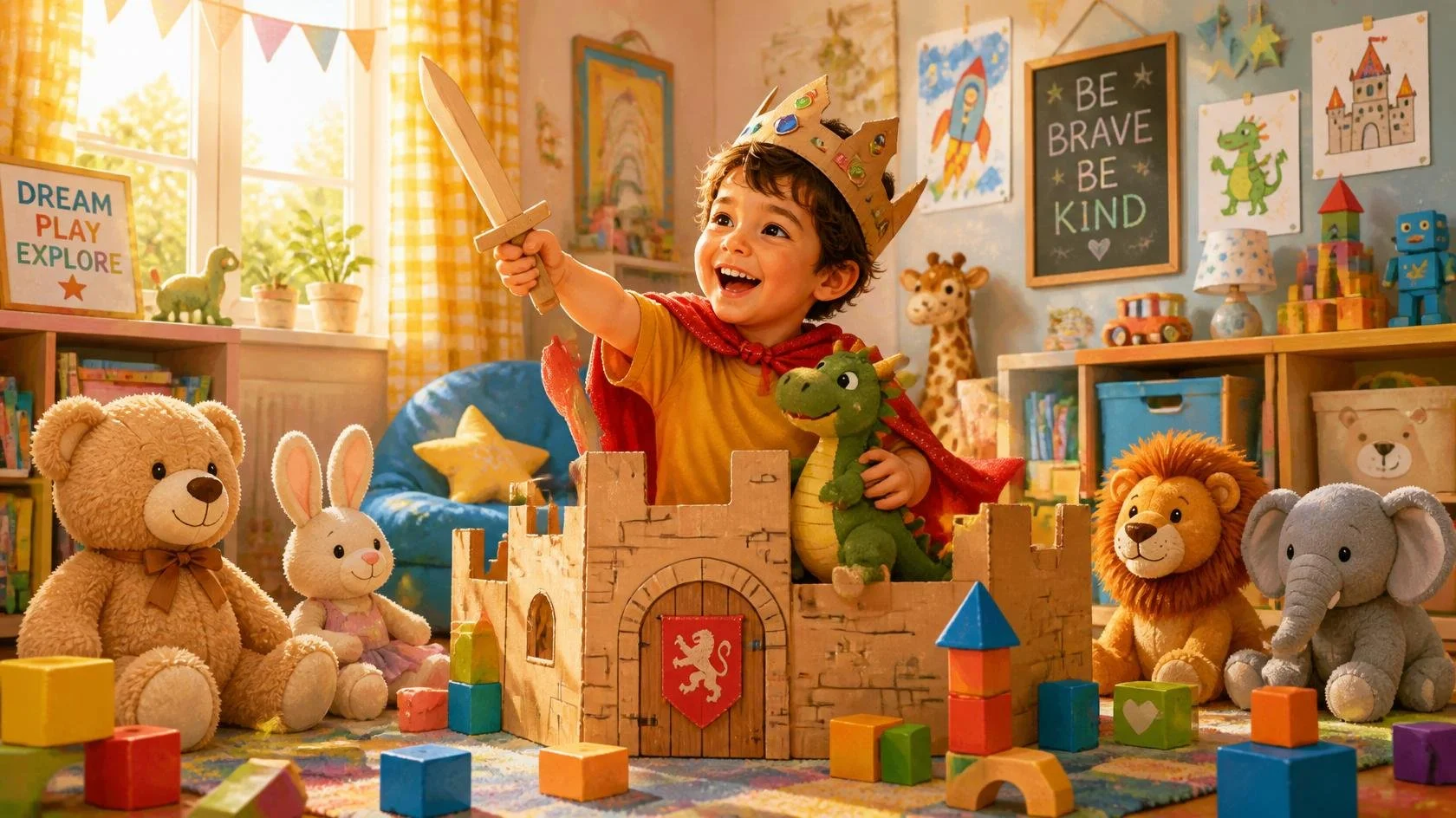
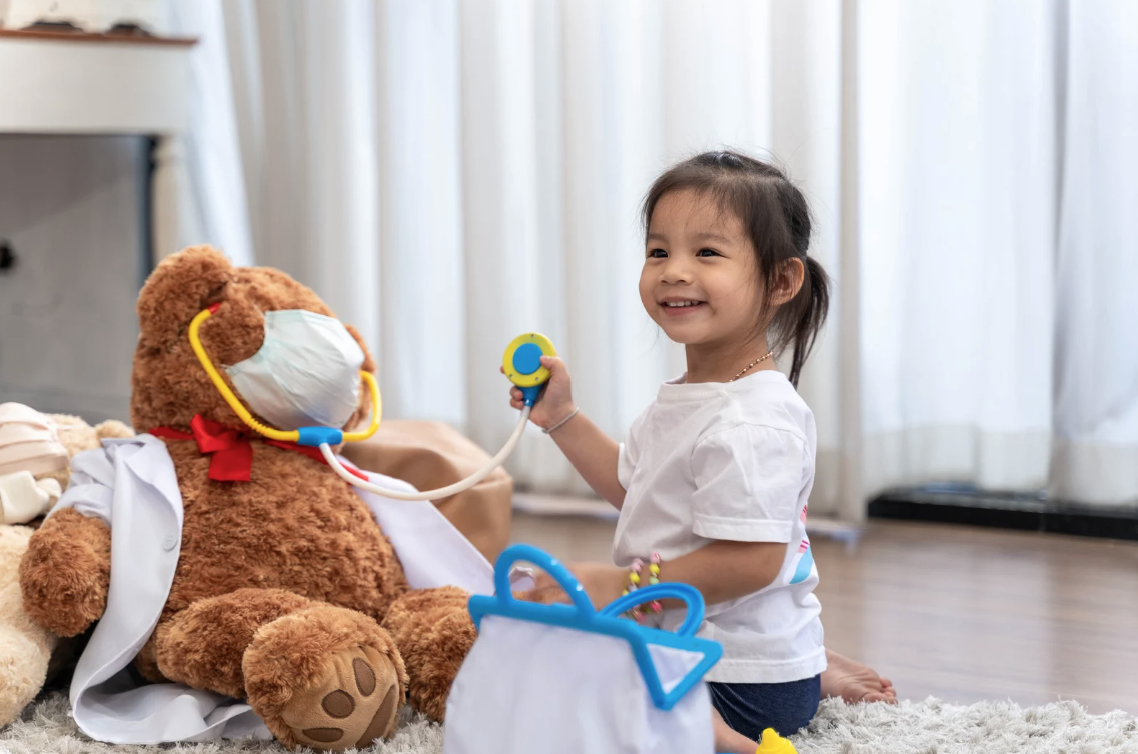
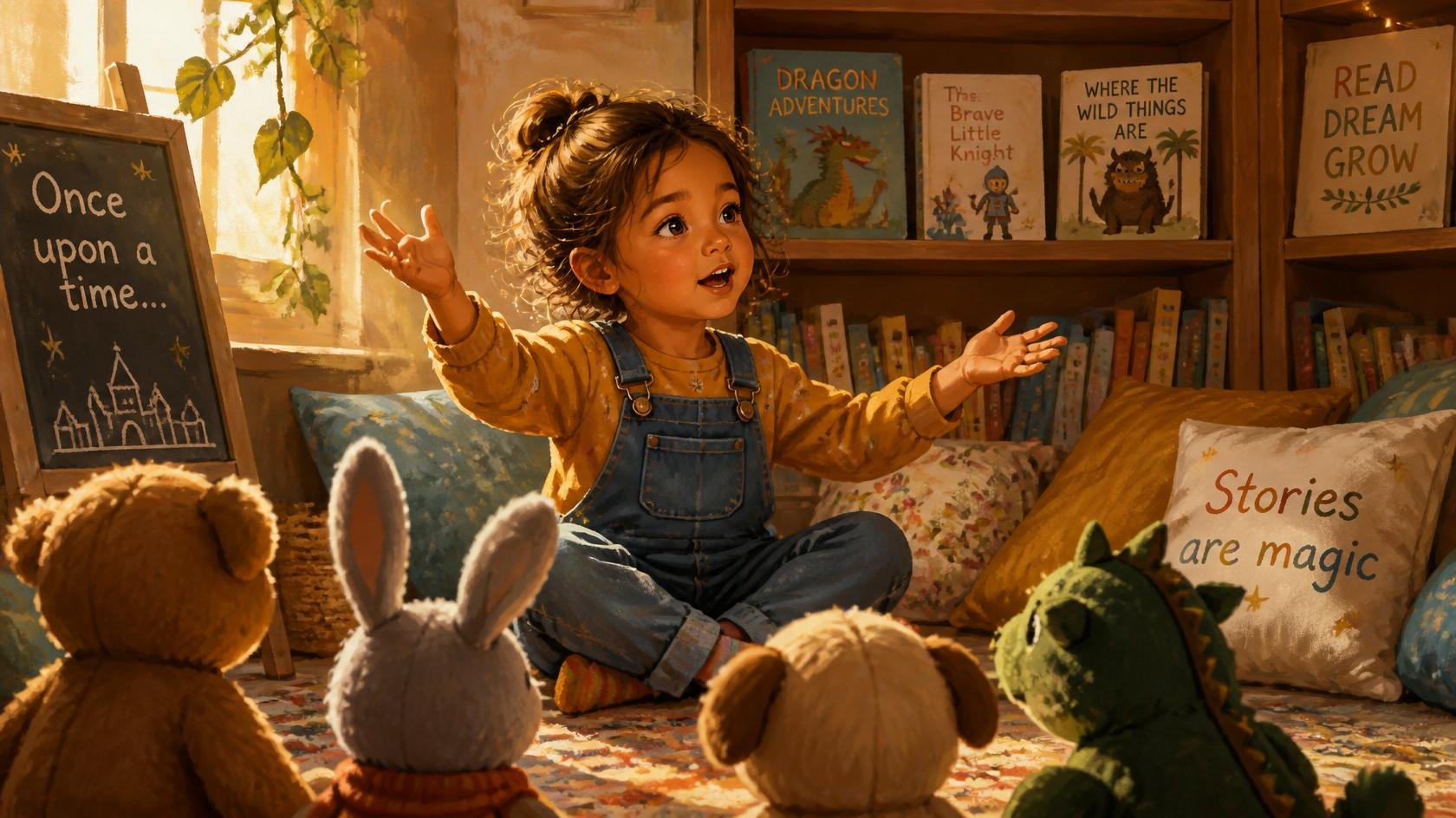
Grab stuffed animals, puppets, or blocks and act a story out together, letting your child decide what happens next. Because the "story" lives in the toys rather than on paper, shy children often open up, and you can quietly narrate ("So then the bunny decided to...") to model how events connect.
Create Homemade Picture Books
Cut pictures from old magazines and help your child glue them onto stapled-together pages. As they place each one, ask them to tell you the story and write their words underneath. A child might choose a dog, a car, and a park and come up with "The dog went to the park in the car," which teaches that print carries meaning and stories move in sequence. The real magic is the rereading: a book your child made and can "read" back builds pride and confidence far more than any worksheet.
Tell Stories Together
Try collaborative storytelling, where you each add a sentence and pass it back and forth. Start with "Once there was a little fox who couldn't sleep," and let your child add the next line. Taking turns removes the fear of a blank page and lets you model narrative moves like introducing a problem or wrapping up a story.
Use Everyday Experiences as Story Ideas
The easiest first stories come straight from your child's week: a grocery trip, a playground visit, baking cookies, a day at Grandma's. Since they already know what happened, they can focus on telling it well rather than inventing from nothing. Retelling real events is also one of the gentlest story sequencing activities you can do, because a familiar day already has a natural first, next, and last built in.
Use Questions That Build Storytelling Skills
The right question can turn a one-word answer into a whole story. Open-ended questions, the kind that can't be answered with "yes" or "no," push a child to think in terms of characters, problems, and events. Instead of "Did you like the park?" try questions that invite narration:
What happened first?
What problem did your character have?
Who helped them?
What surprised everyone?
How did the story end?
Sprinkle these in gently rather than firing them off in a row, and give your child time to answer. A thoughtful pause often produces a better story than a quick follow-up.
Story Prompts Preschoolers Love
When a child needs a spark, a themed prompt gives them a role to step into, which makes inventing characters and events much easier. Here are crowd-pleasers grouped by the kind of story they lead to. You can draw them, act them out, or turn them into a homemade book.
Adventure: a lost dinosaur, a treasure hunt, a space mission.
Animals: a talking puppy, a great zoo escape, a group of forest friends.
Fantasy: a friendly dragon, a magic backpack, a flying castle.
Everyday life: the first day of preschool, a birthday party, a rainy day stuck inside.
Common Mistakes Parents Make When Encouraging Early Writing
Encouraging early writing is mostly about what you don't do. Correcting spelling too early signals that getting it "right" matters more than the idea. Focusing on handwriting turns a creative moment into a drill, and too many questions make storytelling feel like an interview. Expecting polished stories sets a bar preschoolers aren't ready to clear, and comparing siblings teaches a child to measure their creativity against someone else's. Each of these chips away at confidence, the ingredient that matters most at this stage. Protect it, and the skills follow.
What if My Child Doesn't Want to Write?
Plenty of preschoolers resist anything that looks like writing, and that's completely normal. The answer is rarely to push harder, but to make storytelling look nothing like a school task. Tell stories out loud on walks, record them on your phone so your child can hear themselves playing back, act them out with the whole body, draw comics where pictures carry the story, or build a scene with stickers. For a truly reluctant child, playful preschool language activities like rhyming games and silly wordplay can rebuild the sense that language is fun. Any format counts.
How to Make Storytelling Part of Your Daily Routine
Storytelling sticks best when it's woven into the day rather than saved for special occasions. Swap stories at bedtime, ask "tell me the story of your day" after preschool, or keep a story jar of character and setting prompts. Family storytelling nights make it feel social, and weekend picture books made from the week's photos give your child a growing shelf of stories they authored themselves. Keeping a running collection is one of the most enjoyable ways families develop early literacy skills at home, since your child can watch their own progress stack up.
Encouraging your preschooler to "write" their own stories is really about helping them become a confident communicator. Through drawing, play, and imaginative storytelling, children learn that their ideas matter, and as those stories grow, a natural next step is exploring alphabet learning activities that connect the letters they're noticing to the stories they already love telling. At Reading in Preschool, we see storytelling as the first step toward confident reading, so give your child space to imagine out loud, capture their ideas without correcting them, and watch a storyteller take shape.
Frequently Asked Questions
There's no fixed age. Most children begin "telling" stories through play and drawing between ages three and four, long before they can write words. If your child pretends, narrates, or makes up endings, they're already ready.
Yes. In early childhood, drawing is a genuine form of writing and part of emergent writing, where children use pictures, scribbles, and marks to express meaning before they can form letters. Treating a drawing as "their story" builds the foundation that conventional writing grows from.
Not at the preschool stage. Correcting spelling too early pulls attention away from ideas and can make a child hesitant to try. Celebrate the meaning first; there's plenty of time for spelling once your child is writing independently.
A short story is still a story, and completely age-appropriate. Rather than pushing for length, model more with questions like "and then what happened?" or by adding a line of your own. Length grows naturally as confidence and vocabulary build.
Move storytelling away from paper: tell stories on walks, act them out with toys, record them on your phone, or let your child draw comics. Following their interests, whether trucks, dinosaurs, or animals, makes them far more willing to jump in.
Yes. It builds the vocabulary, sequencing, and comprehension that reading depends on. Pairing it with phonological awareness activities like rhyming and clapping out syllables strengthens the sound side of reading at the same time.