How Preschoolers Learn New Words (Children’s Book Week Edition)
Children’s Book Week (May 5th–11th) is the perfect reminder of how powerful books are in helping preschoolers learn new words. During these early years, children absorb vocabulary at an incredible rate. The stories we read with them play a major role in building confidence, communication skills, and early literacy.
At Reading in Preschool, we see every day how strong vocabulary helps children enter Kindergarten and 1st grade ready to thrive — supported by carefully selected books that meet children exactly where they are, ensuring each story challenges and inspires without overwhelming. That is why we create carefully leveled books designed to introduce new words in engaging, developmentally appropriate ways — giving every child a strong foundation for confident, lifelong learning.
Why Vocabulary Matters
A strong vocabulary is at the heart of early learning. It helps children understand what they hear, follow directions, express ideas clearly, and build deeper comprehension once they begin reading on their own. When children know more words, learning becomes smoother, more enjoyable, and far less frustrating.
How Preschoolers Learn New Words
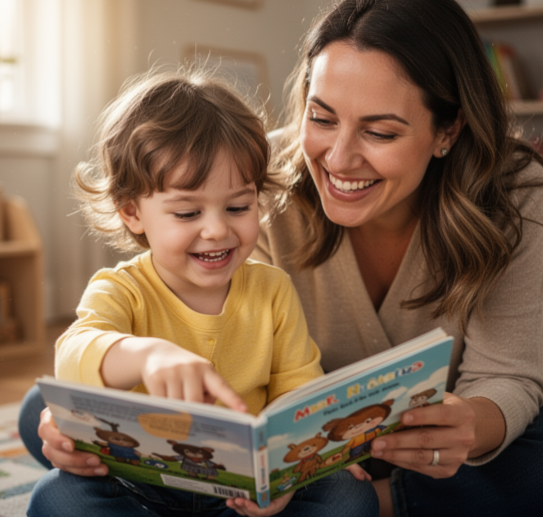
Preschoolers pick up new vocabulary naturally through meaningful interactions. Books are especially powerful because they provide new words in context, supported by pictures, storylines, and your voice.
Children learn new words through:
1) Hearing Words in Context: Books introduce words children don’t typically hear in daily conversation — like enormous, proud, whisper, or meadow.
2) Repetition: Seeing and hearing the same word multiple times helps the meaning “stick.”
3) Talking About the Story: Quick, simple comments (“That’s a meadow — it’s a big grassy field!”) deepen understanding.
4) Modeling Rich Language: When adults naturally use descriptive words, preschoolers begin using them too.
5)Teach Your Child Upper and Lowercase Letter Names with the Letter Sounds:
ie: A-ah. Once the child knows all letter names and sounds, you can introduce simple CVC words beginning with the A word family like Pam and Sam, for example. Talk about words that rhyme with “am” and then show the child 3 letters, like P A M. Take their finger and introduce left to right reading pointing to and sounding out each letter and then going back to the front of the word and saying the whole work. PAM!
6) Use Phonics Based Beginner Programs
Try phonics based programs like The Alexander Reading Method to learn more.
Why Books Are So Powerful
(Children’s Book Week Spotlight)
Books offer a range of describing words, feeling words, action words, and early concept words that children wouldn’t encounter otherwise. During Children’s Book Week, set aside time to explore books that stretch your child’s language in warm, natural ways. Even a single well-chosen story can spark meaningful language growth
How to Introduce New Words While Reading
Reading doesn’t need to feel like a lesson. The goal is to keep the story flowing and connect new words gently. Try:
A quick definition in the moment “The bear was exhausted — that means really, really tired.”
Pointing to a picture for clarity “See how her face looks frustrated?”
Using the new word later in the day “I’m frustrated too — I can’t find my keys!”
These small moments help new vocabulary become part of your child’s everyday speech.
Choosing Books That Build Strong Vocabulary
Not all books support vocabulary growth equally. When selecting books for preschoolers, look for stories that are rich in descriptive language, introduce varied emotions, and feature engaging plots that invite curiosity. Repetition of key words or phrases, clever use of rhyme, and clear illustrations help children notice and remember new vocabulary naturally.
By choosing books thoughtfully, parents can provide children with meaningful exposure to words that expand their understanding of the world — and set the stage for reading success.
In conclusion
Children’s Book Week is a wonderful opportunity to celebrate reading and build vocabulary at the same time. Choose one “vocabulary-rich” book for the week, read it several times, and highlight just a few new words. Keep the experience warm, positive, and curiosity-driven. Every shared reading moment — big or small — strengthens your preschooler’s vocabulary and builds a confident foundation for future reading success.