
Pre-Writing Skills: What Comes Before Letters
Before children begin forming letters, they move through an important stage called pre-writing development. Pre-writing skills are the early abilities, including hand strength, finger control, coordination, and intentional mark-making, that make handwriting feel easier and more natural later on.
Many parents expect writing to begin with letters. In the preschool years, though, children build the foundation through play, movement, and hands-on exploration. At Reading in Preschool, we remind families that this stage is not about rushing into handwriting. It is about preparing the hands and building confidence through everyday experiences.

What Are Pre-Writing Skills?
Pre-writing skills are the early abilities children need before they can write letters. They include:
Hand and finger strength - the muscle power to grip and control a tool
Fine motor control - small, precise movements of the fingers
Hand-eye coordination - making the hands do what the eyes are tracking
Shoulder and arm stability - the "big" control that steadies the small movements
Visual perception - noticing shapes, lines, direction, and spacing
Intentional mark-making - drawing on purpose rather than by accident
Writing is a complex task for young children because the hands, eyes, and brain all have to work together at the same time. When those foundational skills are still developing, writing can feel frustrating. That is exactly why the preschool years are for building the foundation, not the letters.
Why Pre-Writing Skills Matter for Reading, Too
Pre-writing practice does more than prepare the hand. Drawing lines, circles, and crosses trains children to notice the same visual features that distinguish letters. For example, b and d face different directions, while l is straight and c is curved. Strengthening visual awareness, hand control, and understanding of print supports early reading right alongside early writing.
In the preschool years, it is completely normal for writing to look like scribbles, shapes, or drawings. These early marks are a real part of development and show that children are building the control handwriting will eventually require.
Pre-Writing Strokes by Age: What to Expect
Children typically master pre-writing strokes in a predictable order, from simple lines to complex diagonals. This sequence is a general guide, not a deadline. Children develop at different paces.
| Approximate Age | Pre-Writing Skill |
|---|---|
| 12–18 months | Random scribbling with a whole-hand grasp |
| 2 years | Imitates a vertical line and a horizontal line |
| 2.5–3 years | Copies a circle; scribbles become more controlled |
| 3–4 years | Copies a cross (+); begins drawing simple figures |
| 4 years | Copies a square; draws a recognizable person |
| 4.5–5 years | Copies diagonal lines and an X |
| 5 years | Copies a triangle; begins forming familiar letters |
Diagonals are the hardest, which is why letters like A, K, and Z usually come last. If a child cannot yet copy a cross, expecting neat letters is asking the hands to skip a step.
Hands-On Pre-Writing Activities for Preschoolers
The best way to support pre-writing development is through simple, playful experiences that naturally strengthen the hands.
Build Hand Strength
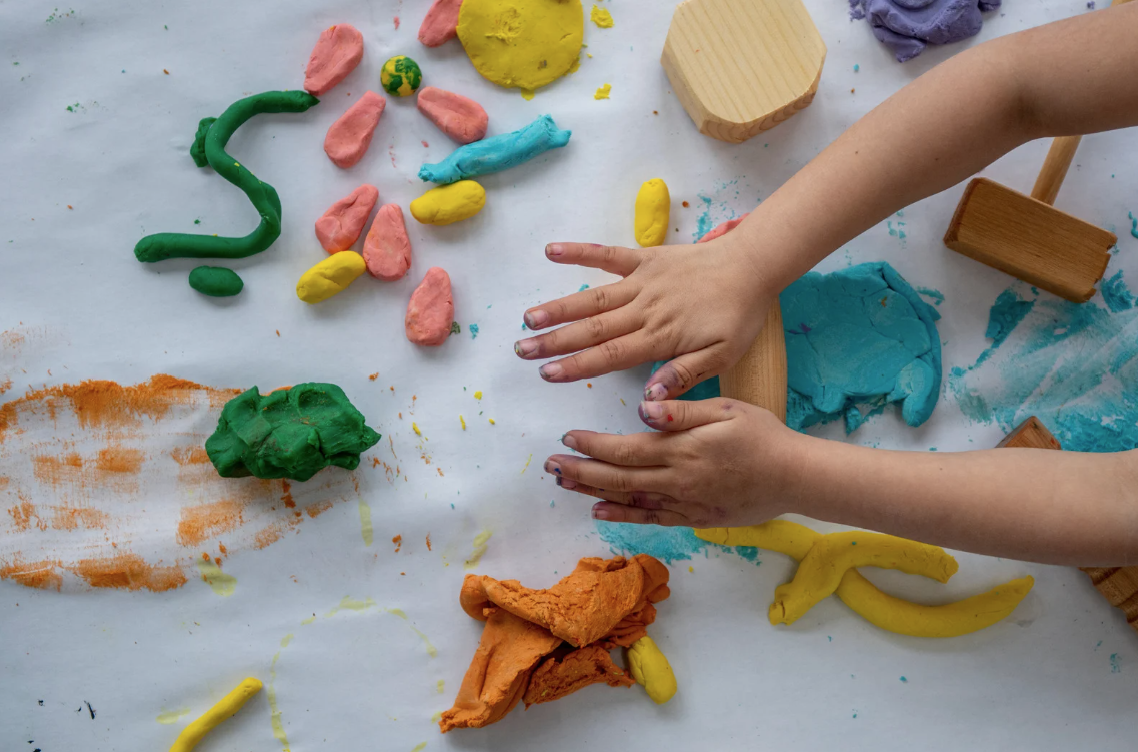
Playdough - squeezing, rolling, pinching, and shaping is the single most useful pre-writing activity there is.
Tongs and tweezers - moving pom-poms or cereal from bowl to bowl builds the exact finger muscles used for a pencil grip.
Spray bottles and turkey basters - squeezing water in the bath or garden strengthens the whole hand.
Tearing and crumpling paper - free, easy, and surprisingly effective.
Build Coordination and Mark-Making
Finger painting and chalk drawing
Stamping and stickers
Scribbling freely with crayons or markers
Threading pipe cleaners through a colander
Early cutting with child-safe scissors
These activities work best when they feel playful, open-ended, and pressure-free. Short crayons and broken chunks of chalk are worth noting: they physically prevent a fist grip and encourage the three-finger grasp writing eventually needs.
Building Control Through Big Movement
Before children can control a pencil, they need practice with larger movements. Control develops from the center of the body outward, from the shoulder to the elbow, then the wrist, and finally the fingers, so arm work is not a detour from writing. It is the first step.
Try drawing big shapes in the air, painting on an easel, chalking on a driveway, or working on paper taped to a wall. Vertical surfaces are especially good because they naturally position the wrist for writing.
As children gain confidence, these larger motions refine into smaller, more precise marks.
Building Precision
As strength and coordination develop, children need chances to practice accuracy:
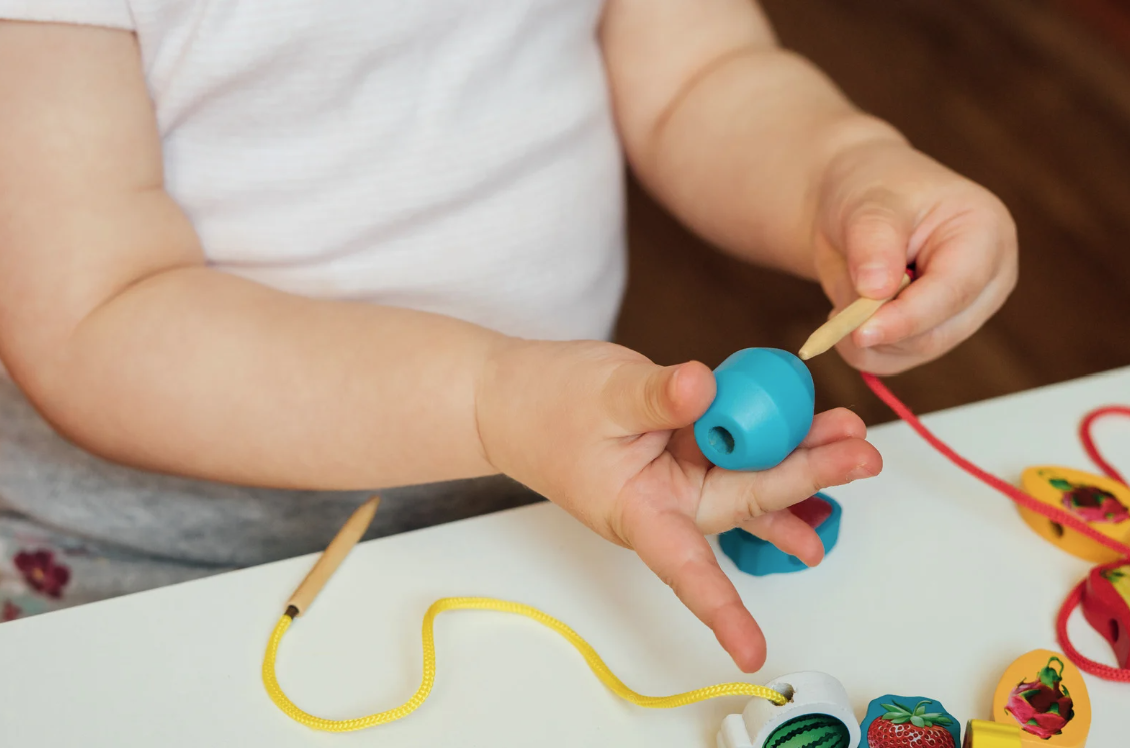
Bead stringing and lacing cards strengthen hand-eye coordination and finger dexterity.
Coloring develops controlled pencil movement and staying within a boundary.
Connect-the-dots supports visual tracking and early left-to-right directional awareness.
Mazes and simple tracing bridge open-ended play and structured writing tasks.
These experiences encourage children to slow down and focus; the habit that later makes letter formation possible.
Learning Through Trial and Error
Pre-writing skills develop through small, frequent opportunities for trial and error with supportive encouragement. Children often repeat a movement many times before gaining control, and that repetition is the learning, not a sign of struggle.
Five to ten minutes of playful hand work a day does more than a long, reluctant session once a week. With gentle guidance and positive reinforcement, children build confidence in their hands and comfort with new tools.
Keep It Light and Pressure-Free
At this stage, children do not need to form letters correctly. The goal is comfort, exploration, and confidence. Every child develops at a different pace, and all forms of drawing, scribbling, and hands-on play contribute to readiness over time.
A few things that help:
Praise the effort and the process, not the neatness
Let children choose the tool and the subject
Stop while it is still fun
Skip handwriting worksheets until the hand is ready for them
When to Check In With a Professional
Most differences in pace are perfectly normal. It is still worth mentioning to your pediatrician or an occupational therapist if a four- or five-year-old consistently avoids all drawing and coloring, cannot hold a crayon with the fingers at all, tires or complains of pain after a minute or two, or shows no interest in making marks of any kind. Early support is simple, playful, and often quick.
Final Thoughts
Pre-writing skills are the foundation of early writing development. Before letters come into focus, children need time to build strength, coordination, and control through play-based experiences.
At Reading in Preschool, we encourage parents to see this stage as preparation, not pressure. These early experiences lay the groundwork for confident writers and for the strong early literacy skills that follow.
Curious whether your child is ready for the next step in reading and writing? Connect with our team to learn how the Alexander Reading Method builds early literacy at your child's own pace.
Frequently Asked Questions
Pre-writing skills are the abilities children develop before they can write letters, including hand strength, finger control, hand-eye coordination, arm stability, and the ability to make intentional marks and copy basic shapes.
Most 3-year-olds can imitate vertical and horizontal lines and copy a circle. Their scribbling becomes more controlled and purposeful, and drawings start to be things they can name.
Many 4-year-olds can copy a cross and a square, draw a recognizable person, use child-safe scissors, and begin working on diagonal lines.
There is no single right age. Most children are ready for letter formation around ages 4 to 5, once they can comfortably copy a circle, a cross, and a square. Interest in letters usually comes before hand control. That is normal.
Tracing worksheets can be part of the picture, but they don't build hand strength. Playdough, cutting, threading, and big-movement drawing do far more, and children stay engaged with them much longer.
Short and frequent beats long and formal. Five to ten minutes of playful hand activity most days is plenty at this stage.