Travel-Friendly Literacy Games for Road Trips
A summer road trip might feel like a break from the usual routine, but it doesn't have to be a break from learning. The truth is, travel hands you all sorts of natural moments to reinforce phonics, vocabulary, and early reading skills, and you can do it without anyone feeling like they're sitting through a lesson. With just a little planning, those long stretches of highway can turn into something genuinely fun that keeps kids learning while summer still feels like summer.
Even quick activities in the car can go a long way toward building letter recognition, phonemic awareness, storytelling ability, and a richer vocabulary. These are the building blocks of confident reading, and they pair nicely with whatever learning is already happening at home.
1. Letter and Sound Observation
Why It Matters
Knowing letters and linking them to their sounds is one of the first real steps toward reading. Road trips are packed with opportunities for kids to practice this without even trying.
How to Play
Ask your kids to look for letters on store names, road signs, billboards, and license plates. Ask them to identify a word that begins with the same sound and to say it out loud when they find one.
If you've got an older preschooler, raise the stakes a little. Challenge them to find letters in alphabetical order, or pick one letter and track it for the whole trip.
Pro Tip
Toss a small notebook or travel journal in the car so your child can jot down the letters and words they find along the way. It becomes a fun little keepsake and keeps the literacy practice going.
2. Phonics "I Spy" Game
Why It Matters
This one's all about hearing the separate sounds inside a word. That skill, picking apart the /m/ in "map" from the rest of it, is a quiet but huge step toward reading on their own.
How to Play
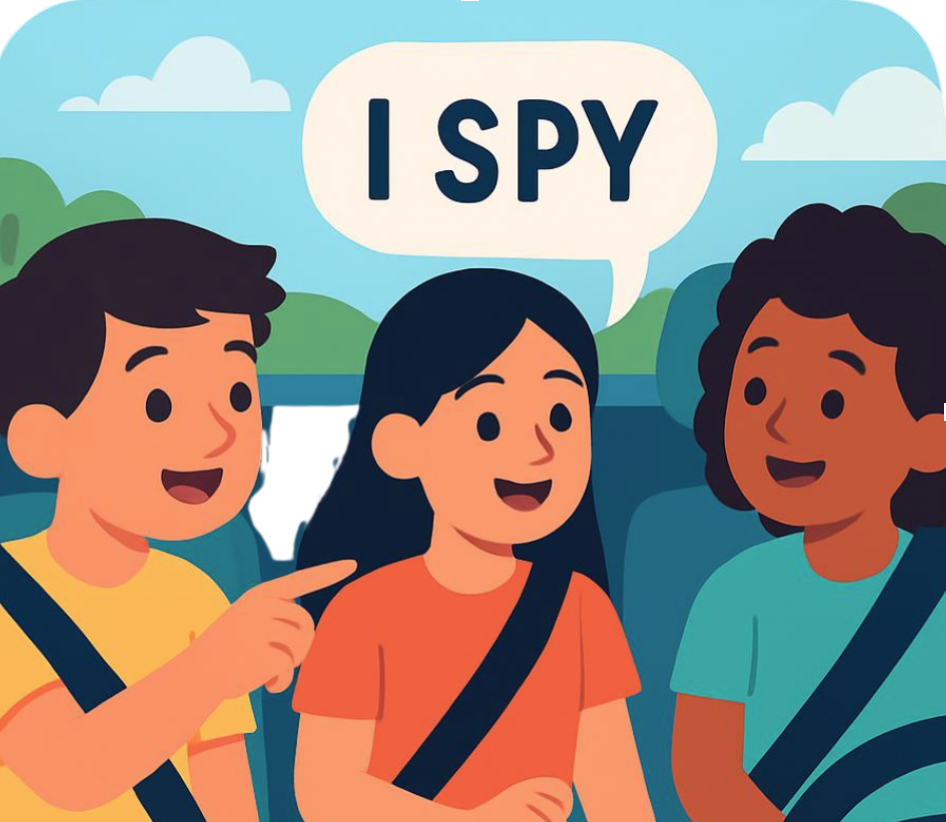
Pick a sound and call it out: "I spy something that starts with /m/." Then your kid goes hunting, in the car, out the window, doesn't matter. First thing they land on counts.
You can stretch the game further with rhyming clues, too, such as "I spy something that rhymes with cat." Want to get the whole family involved? Keep a running tally of correct guesses and make it a little friendly competition.
Expert Insight
Easy sound games like this build phonics skills without ever feeling like schoolwork.
3. Descriptive Storytelling Adventures
Why It Matters
Reading well isn't just about sounding out words. Vocabulary and comprehension matter just as much, and storytelling helps both grow.
How to Play
Let the scenery do the heavy lifting. Landmarks, animals, and roadside oddities all make great story starters. Kids default to "big tree." Your job is to be a little unsatisfied with that. "How big?" Pretty soon you've got an enormous tree stretching way up into the sky, and they got there themselves.
From there it kind of snowballs. Who lives in the tree? Are they happy about it? Before long you're building a whole story together, trading lines back and forth. Older kids can handle more, so throw bigger words at them and see what sticks.
Pro Tip
Record your favorite stories on your phone or write them in a notebook. Revisiting them later is a simple way to lock in new words.
4. Alphabet Road Trip Challenge
Why It Matters
Working through letters and words in order helps cement alphabet recognition and those early decoding skills.
How to Play
Take on the alphabet one letter at a time by spotting objects, signs, or words that begin with each one. Have your child say the letter name, its sound, and a word that goes with it.
Older kids can write the letters down or build simple words from what they find. For an extra layer, try grouping words by pattern, like "B" words (bus, barn, ball).
Expert Insight
This activity has just enough structure to feel purposeful while still being playful, and it ties letters, sounds, and meanings together in everyday surroundings.
5. Rhyming and Word Play on the Road
Why It Matters
Rhyming games strengthen phonological awareness, another key component of early reading development.
How to Play
Pick a word family like "-at" and take turns rattling off rhymes: cat, hat, bat, mat. Then encourage your child to drop those words into simple sentences or short stories, which builds vocabulary and comprehension at the same time.
For a creative spin, challenge them to invent a silly rhyming story as you drive.
Pro Tip
Bring those favorite rhymes back later in the day, maybe at snack time, during bedtime stories, or out in the yard. The repetition helps new words stick without any pressure.
6. Extend Learning Beyond the Car
The learning doesn't have to stop the moment you pull into the driveway. Once you've arrived, encourage your child to:
Draw pictures inspired by the trip
Write simple words or sentences about what they saw
Retell their favorite moments from the drive
Use photos or souvenirs to spark conversations about new words
For instance, you might ask, "Remember that giant sunflower we passed? How would you describe it?" These little follow-ups tie phonics, vocabulary, comprehension, and storytelling together in ways that actually mean something to your child.
Road trips can be much more than just the distance between points A and B. They can be transformed into genuine possibilities for language growth, storytelling, and reading development with a few games, some wordplay, and some good conversation. Best of all, none of it needs to feel like effort. Even a few minutes of entertaining literacy exercise on the road can boost confidence, pique curiosity, and establish the groundwork for a lifetime love of learning.